

Case study · Pulse Protocol

We power the platform behind Pulse Protocol’s medical travel network

Since 2020 we’ve run and grown the platform Pulse uses to bring international patients to 100+ doctors in Latin America: 200+ releases and counting.

Two physicians and a patient coordinator talking with a patient in a modern clinic
Client
Pulse Protocol
Industry
Medical travel
Timeline
2020 – present
Services
Web apps, Backend & APIs, Telehealth, Payments integration, DevOps, Platform maintenance
Platforms
Web

The opportunity

Pulse Protocol brings international patients, mostly from the US and Canada, to elite surgeons and clinics in Latin America. Its coordinators and its platform run the whole journey: the first inquiry, consultations, records and imaging, quotes, payments, travel and follow-up. Pulse earns only when its providers do.

Pulse’s first development team built the original Ruby on Rails platform in 2019 and 2020. In August 2020 Pulse brought us in to take it over, keep it running, and build what the business needed next.

What we built, and why it mattered

One workspace for the whole patient journey

International patients ask a lot before they book, across time zones and languages. Slow answers, or answers lost between email, WhatsApp and the phone, cost providers patients.

We build the platform Pulse’s coordinators and providers work in. WhatsApp and SMS messages land in the same conversations as in-app chat, and providers manage leads, patients, quotes, messages and their calendar from our partner app, in English or Spanish.

Why it mattered: Pulse’s case studies credit this communication layer. An orthopedic practice in Puerto Vallarta went from converting 11% of its leads to 20%, and international patients grew to 90% of its practice.
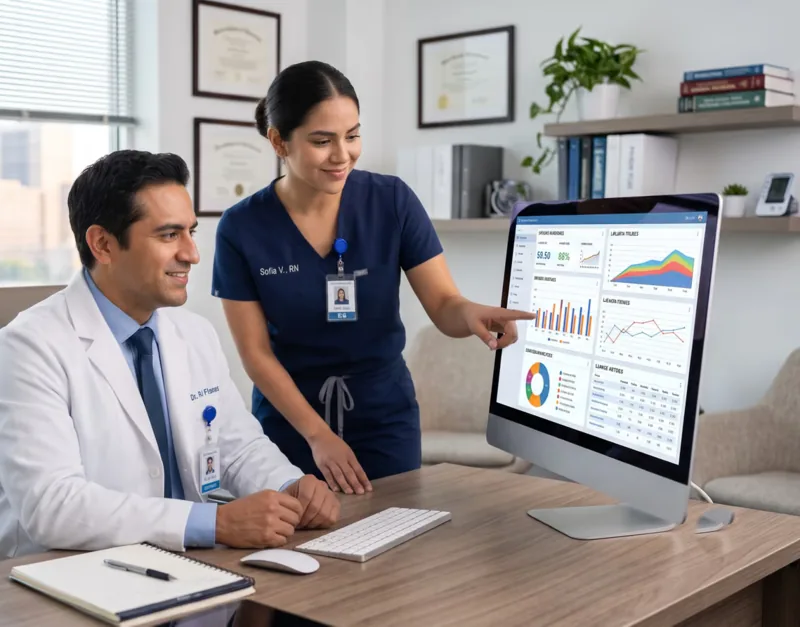

A doctor and a patient coordinator reviewing dashboards on a computer
Providers and coordinators work from one platform.

Every lead captured and followed

Leads come from providers’ own websites, marketing agencies and campaigns. A lead nobody follows up is a patient lost.

We built embeddable lead forms, in English and Spanish, that providers add to their websites with one script tag. Every inquiry lands in the same pipeline Pulse’s coordinators work from, ready for a follow-up.

Why it mattered: In Pulse’s case studies, a regenerative medicine center went from no managed pipeline to 84 leads a month, and a plastic surgeon turned 889 leads into 76 confirmed surgeries in a year.

A patient coordinator on a headset talking with a patient on her phone
Coordinators follow up with patients from the first inquiry.

Consultations and records before the trip

Patients want to meet their surgeon and share their medical history before they fly to another country.

In 2021 we added video consultations, and in 2023 a medical-imaging viewer: patients upload X-rays and scans, and providers review them in the browser. Patients do it all from the patient app we built in Next.js, which also handles messages, packages, quotes and documents.

Why it mattered: Patients decide with confidence, and providers can plan care before the patient arrives: the trust a cross-border decision needs.

A patient in a video consultation with a doctor on her laptop
Video consultations before the trip.

Payments that work across borders

International patients pay from many countries, in many currencies, and in different ways.

In October 2026 we shipped expanded patient payments with more currencies, bank wires and local bank-transfer options through Stripe. Pulse’s team can switch payment methods on or off from its Stripe dashboard.

Why it mattered: More patients can pay the way they’re used to, and Pulse controls its payment options without an engineering change.

Travelers with luggage walking to a plane
Patients pay the way they’re used to, wherever they live.

Releases that never stop

Pulse needed a platform it could keep improving, without a risky release day.

Since October 2020, every merge to master deploys to production on AWS automatically. Numbered releases bundle new features and fixes ship between them; the production pipeline has run 275 times since.

Why it mattered: Pulse gets new features and fixes continuously, and a fix doesn’t wait for the next release.

How we built it

Grow the Rails core, don’t rewrite it

The Ruby on Rails platform, with PostgreSQL and Sidekiq, stays the system of record. New patient and partner experiences are separate Next.js apps on top of it.

Imaging on its own DICOM server

Medical images go to an Orthanc DICOM server and open in a browser viewer, kept apart from the main app and shared only with the people a patient’s permissions allow.

Deploy on every merge

GitHub Actions packages the app and deploys it to AWS Elastic Beanstalk whenever master changes, so a release is a merge, not an event.

Payment methods managed in Stripe

Cards, bank transfers and other methods run through Stripe, so Pulse can turn methods on or off by country and currency in its Stripe dashboard instead of waiting for a release.

Technology

  • Ruby on Rails
  • PostgreSQL
  • Sidekiq
  • Redis
  • Next.js
  • React
  • TypeScript
  • Tailwind CSS
  • Orthanc (DICOM)
  • Plivo
  • Twilio
  • Stripe
  • AWS Elastic Beanstalk
  • GitHub Actions

How we work together

Since August 2020 we’ve been Pulse’s engineering team. We run the platform, ship its releases and build what comes next: video consultations in 2021, the patient app, the medical-imaging viewer in 2023, the partner app and lead forms, and international payments in 2026.

We plan and review the work with Pulse’s product and operations leads on a regular tech call, and their team tests each release before it ships.

Next case study: Reeplayer: We put youth games on families’ phones, live

All work

Got an app idea? Let’s build it.

Tell us where your app is today and where you want it to go.